-
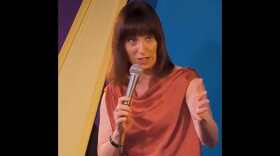 The 3rd annual Catskills Comedy Festival starts Friday night, and among the performers is stand-up comedian, Moth storyteller, and former NPR host Ophira Eisenberg. Eisenberg will be at the Community Theater in Catskill Friday at 7 p.m. to kick off the festival. The performance comes just months after the release of her new comedy special on Amazon Prime called "I Used to Be Nicer." As she discussed with WAMC's Sam Dingman, she does a lot of material in that special about being a parent.
 -
 Democratic incumbent U.S. Rep. Paul Tonko and Republican Ralph Ambrosio faced off on the debate stage Thursday as Election Day nears. The candidates are vying to represent New York's 20th Congressional District. WAMC's Sajina Shrestha was on the panel of reporters asking the candidates questions. She joined WAMC's Sam Dingman and Annie Bennett on Northeast Notebook Live to break down the evening.
 -
 New York Democratic Gov. Kathy Hochul and Republican challenger Bruce Blakeman faced off in their only debate of the gubernatorial campaign Tuesday. It was moderated by Susan Arbetter, anchor of "Capital Tonight" on Spectrum News. She reflected on the night with WAMC's David Guistina.
 -
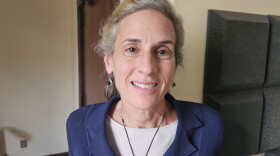 Incumbent Democratic Massachusetts U.S. Rep. Richard Neal, who has held the seat for almost 40 years, faces independent challenger Nadia Milleron in a rematch from 2024 between the career politician and the aviation safety activist from Sheffield, who lost her daughter in a 2019 Boeing 737 Max jet crash in Ethiopia.
 -
 AI-generated election content is becoming more realistic and prevalent ahead of midterm elections in New York and the entire U.S.
 -
 People at a recent festival in Plattsburgh said they want to hear where candidates stand on the issues
 -
 WAMC’s David Guistina in conversation with Kevin Moran, Executive Editor at The Berkshire Eagle, about the nine statewide ballot questions for Massachusetts voters in the coming midterm elections.
 -
 Troy Mayor Carmella Mantello argued the regulations on automated license plate readers, like the ones in the city manufactured by Flock Safety, would undermine the Troy Police and make crime more difficult to solve.
 -
 Last week, the Siena Research Institute, in collaboration with WAMC, the Times Union, and WPTZ, published a poll showing Democrat Blake Gendebien up by 4% against his Republican opponent Anthony Constantino in the race to represent New York's 21st Congressional District. WAMC's Sam Dingman spoke with Southern Adirondack Bureau Chief Aaron Shellow-Lavine, who has spent the last few days catching up with some of the folks who contributed to that poll, on Northeast Notebook Live about what he heard from voters.
 -
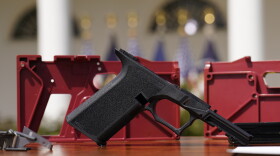 Two years ago, Massachusetts lawmakers passed "an act modernizing firearm laws." The bill was extensive, and it took aim at everything from ghost guns to devices that arguably convert semi-automatic firearms into automatic machine guns. Now, though, voters have a chance to shoot it down. Ballot Question 9 is a referendum on the law, which critics have been calling overkill that overly burdens firearm owners. Advocates, meanwhile, argue the bill modernizes aging gun laws for a new era, while better protecting residents in a state with one of the lowest firearm death rates in the country.
 -
 Honorah Bullough walks the streets of Troy with a phone and a microphone. She asks people she meets to talk about their experiences, and then she edits their answers down into short, punchy videos. The on-the-ground portraits of who is out and about in the streets of Troy also show how those people perceive the place that they live. The series on Instagram, TikTok and Facebook is called "What's Troy Thinking." Bullough discussed the project and how it came to be on Northeast Notebook Live with WAMC's Sam Dingman and Molly Anderson.
 -
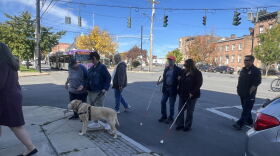 White Cane Awareness Day is a day to raise awareness about the right of blind and visually-impaired people to move freely with a white cane or a guide dog. As WAMC's Sajina Shrestha reports, many people use the day to also promote pedestrian safety.

© 2026

Play Live Radio
Next Up:
0:00
0:00
Available On Air Stations


