


From green business and new environmental legislation to how nature impacts our environment in ways never before considered, Earth Wise offers a look at our changing environment.
-
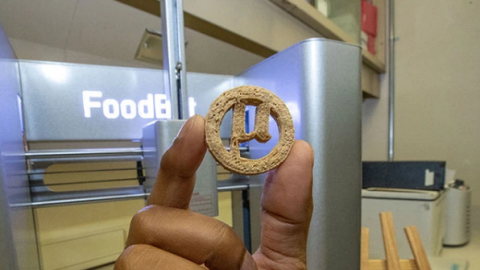 FlickrThe idea of making cookies from recycled plastic seems both ridiculous and quite unappetizing, but researchers at Southern Illinois University may actually make it possible.
 -
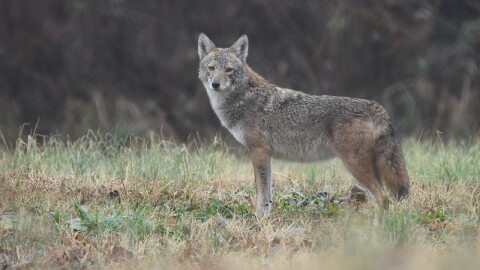 Andy Reago & Chrissy McClarren/FlickrCoyotes are canines native to North America, closely related to gray wolves but smaller. They are widely distributed and over the past century, coyotes have colonized every major metropolitan area in North America. Once they get a taste for city living, they happily forsake the wild. In cities, food is abundant and predators are scarce.


-
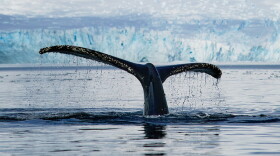 Commercial whaling killed nearly 3 million whales in the 20th century, reducing many global populations by up to 90%. The International Whaling Commission set a ban on commercial hunting in 1986, allowing numbers to slowly climb. Every whaling nation agreed to the ban at that time. However, Norway resumed commercial whaling in 1993, Iceland in 2006, and Japan in 2019.
 -
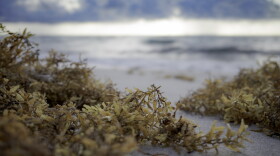 This past summer, beaches in Florida and the Caribbean have been piled high with foul-smelling sargassum seaweed, often in record amounts. It is the visible sign of a vast marine ecosystem that emerged in 2011 and now spreads across a 5,500-mile-long belt from Mexico to West Africa and Florida to Brazil.
 -
 The largest source of carbon dioxide and other planet-warming gases in the United States is the transportation sector. The second largest source and nearly as large is the generation of electricity.
 -
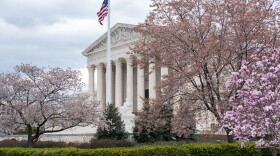 There is a congressional bill working its way through the legislative process titled the "Stop Climate Shakedowns Act of 2026." The stated purpose of the bill is to "prohibit liability against those engaged in the mining, extraction, production, refinement, transportation, distribution, marketing, manufacture, or sale of energy for damages or injunctive or other relief."
 -
 The US added more battery storage capacity in the second quarter of this year than in any quarter ever. In fact, the 20.2 gigawatt-hours of batteries installed during those three months represents one tenth of the nation’s entire grid storage capacity.
 -
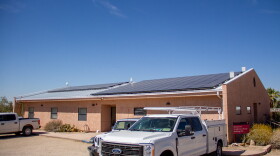 It’s been a rough year for the rooftop solar business. The Trump administration passed a measure last year that phased out the main federal tax credit for rooftop solar. It also imposed tariffs on imported photovoltaic panels and other parts. These policy changes have led to significant decreases in sales for installers. Estimates are that new residential solar generating capacity will fall 21% this year compared to 2025. That is a big enough drop to put many U.S. solar companies out of business altogether and to force the remaining companies to slash costs.
 -
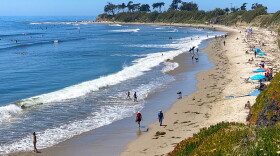 Marine heat waves are becoming more frequent, longer lasting, and more intense as the climate warms. And new research suggests their impacts extend far beyond dying coral reefs and declining fish populations.
 -
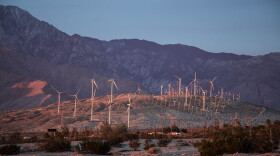 The world is in a global transition from a fossil-fuel-based energy system to a zero-carbon, renewable energy system. Renewable sources including solar, wind, hydroelectric, and geothermal power form the backbone of energy production along with nuclear power. Heating, transportation, and industrial processes are shifting to run on electricity rather than burning fossil fuels.
 -
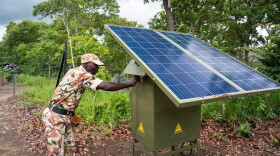 Africa is experiencing a boom in solar energy that is largely unaccounted for in any official statistics. It is primarily composed of rooftop arrays and other small systems and is mostly in sub-Saharan Africa. The rapid buildout is driving solar generation to record levels but is largely untracked.
 -
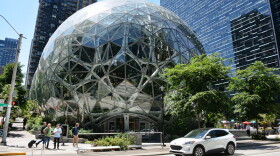 Hyperscalers are large technology companies that build and operate massive, globally distributed data center networks to provide cloud computing, storage, and networking services on an enormous scale. Examples include Amazon, Google, Meta, Microsoft, and Alibaba.


