-
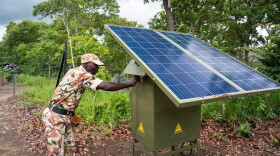 Africa is experiencing a boom in solar energy that is largely unaccounted for in any official statistics. It is primarily composed of rooftop arrays and other small systems and is mostly in sub-Saharan Africa. The rapid buildout is driving solar generation to record levels but is largely untracked.
 -
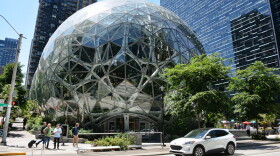 Hyperscalers are large technology companies that build and operate massive, globally distributed data center networks to provide cloud computing, storage, and networking services on an enormous scale. Examples include Amazon, Google, Meta, Microsoft, and Alibaba.
 -
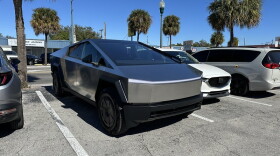 Electric vehicles are basically giant power banks on wheels. They swallow up lots of electricity at charging stations or home outlets in order to power the vehicle. However, in principle, they could also send back that stored up energy to power appliances and homes or even send it back to the grid to bolster the local utility. This sort of capability is called vehicle-to-everything, or V2X.
 -
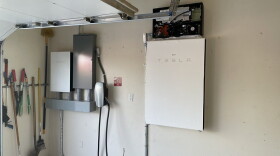 The elimination of federal tax credits for solar installations and electric cars have wreaked havoc with sales for these green energy technologies. The Republican Congress voted to have these credits expire at the end of last year. People raced to lock in good deals on both EVs and rooftop solar. Then, with the arrival of the new year, sales cratered – at least for a while.
 -
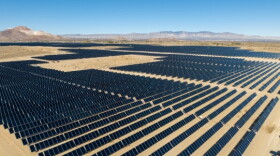 The largest solar energy project in the United States is under construction in Arkansas. The Steel River Energy Center will eventually include 2.5 GW of solar and 2.9 GWh of battery energy storage.
 -
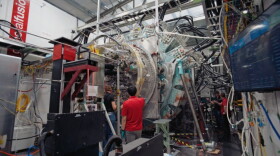 Fusion power is how the sun works. Light atomic nuclei (like hydrogen) fuse together at super high temperatures to form heavier nuclei (like helium). The process releases massive amounts of energy without producing radioactive waste or greenhouse gases. Fusion is considered to be the holy grail of clean energy. But even after many decades of intensive research, there is not yet a way to maintain the temperature, density, and confinement to have a fusion reaction go on long enough to produce continuous net-positive energy output.
 -
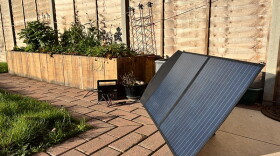 During the past year, there has been growing interest in the U.S. in balcony solar: small solar panel systems that are hung up outside and send power straight into wall sockets to partially offset people’s utility bills. These systems first appeared in Germany in the late 2010s and spread through Europe when energy prices spiked because of the war in Ukraine. German households had installed more than four million systems as of last year.
 -
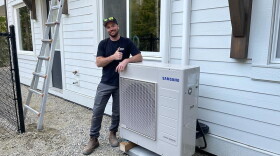 A heat pump is a kind of HVAC appliance that handles both heating and cooling. It doesn’t burn fuel to generate heat. Instead, it uses electricity to move heat around. In the winter, it extracts warmth from outside air, the ground, or water and transfers it indoors. In the summer, it reverses the process to provide cooling. Heat pumps are far more efficient than conventional heaters and air conditioners.
 -
 A space mirror satellite is an orbiting spacecraft that features a large deployable reflective surface. Its purpose is to redirect sunlight and beam it down to a specific location on Earth. It would basically provide sunlight on demand.
 -
 The federal government started promoting energy efficiency in the 1970s in the wake of the Arab oil embargo. Since that time, successive administrations, both Republican and Democratic, instituted regulations about energy efficiency that have transformed the US economy. Energy efficiency has been pretty much the most bipartisan issue in the country. As a result, today’s refrigerators use about one-third the electricity of those from the 70s. Stricter fuel-economy standards for cars have saved Americans about $5 trillion in gasoline costs.

© 2026

Play Live Radio
Next Up:
0:00
0:00
Available On Air Stations


