-
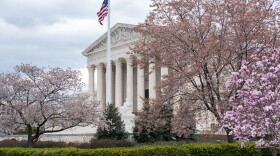 There is a congressional bill working its way through the legislative process titled the "Stop Climate Shakedowns Act of 2026." The stated purpose of the bill is to "prohibit liability against those engaged in the mining, extraction, production, refinement, transportation, distribution, marketing, manufacture, or sale of energy for damages or injunctive or other relief."
 -
 The US added more battery storage capacity in the second quarter of this year than in any quarter ever. In fact, the 20.2 gigawatt-hours of batteries installed during those three months represents one tenth of the nation’s entire grid storage capacity.
 -
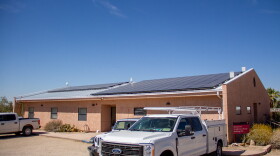 It’s been a rough year for the rooftop solar business. The Trump administration passed a measure last year that phased out the main federal tax credit for rooftop solar. It also imposed tariffs on imported photovoltaic panels and other parts. These policy changes have led to significant decreases in sales for installers. Estimates are that new residential solar generating capacity will fall 21% this year compared to 2025. That is a big enough drop to put many U.S. solar companies out of business altogether and to force the remaining companies to slash costs.
 -
 Marine heat waves are becoming more frequent, longer lasting, and more intense as the climate warms. And new research suggests their impacts extend far beyond dying coral reefs and declining fish populations.
 -
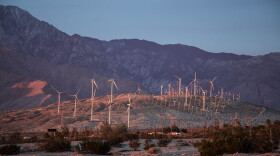 The world is in a global transition from a fossil-fuel-based energy system to a zero-carbon, renewable energy system. Renewable sources including solar, wind, hydroelectric, and geothermal power form the backbone of energy production along with nuclear power. Heating, transportation, and industrial processes are shifting to run on electricity rather than burning fossil fuels.
 -
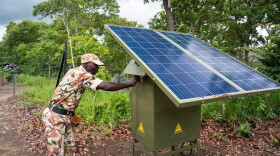 Africa is experiencing a boom in solar energy that is largely unaccounted for in any official statistics. It is primarily composed of rooftop arrays and other small systems and is mostly in sub-Saharan Africa. The rapid buildout is driving solar generation to record levels but is largely untracked.
 -
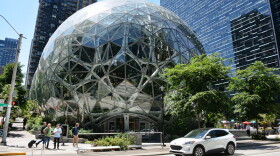 Hyperscalers are large technology companies that build and operate massive, globally distributed data center networks to provide cloud computing, storage, and networking services on an enormous scale. Examples include Amazon, Google, Meta, Microsoft, and Alibaba.
 -
 Phytomining is an agricultural and environmental process that makes use of specific plants called hyperaccumulators to absorb and concentrate valuable metals and critical minerals directly from the soil.
 -
 Italians have long resisted using air conditioning in their homes and businesses. They viewed it as a threat to their health. A research article published in 2023 even cited air conditioning as causing so-called sick building syndrome, absenteeism from work, and a variety of respiratory ailments. Many Italians believe that “a blast of air” can cause headaches, muscle cramps, and neck pain.
 -
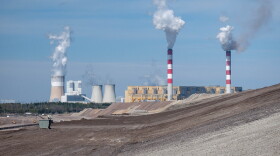 Under the Paris Climate Agreement of 2015, more than 190 countries pledged to keep the global temperature less than 1.5 degrees Celsius above the average during the preindustrial period of 1850 to 1900. This period was before humans altered the atmosphere and the climate by emitting billions of tons of fossil fuel emissions and other pollutants. The level was chosen because climate models indicated that warming further would greatly intensify extreme weather events, ecosystem losses, and even potential submersion of small island countries.

© 2026

Play Live Radio
Next Up:
0:00
0:00
Available On Air Stations


