-
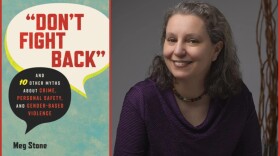 On this week’s 51%, we speak with Meg Stone, violence prevention expert and executive director of IMPACT Boston, about her upcoming book “Don’t Fight Back” And 10 Other Myths About Crime, Personal Safety, and Gender-Based Violence. Stone says a lot of common “safety tips” aimed at protecting women from violence aren’t actually based on quality research and reinforce the power structures that enable abusers in the first place. “Don’t Fight Back” addresses some of the most common myths and equips women with personal safety advice that doesn’t encourage them to make their lives small or accept the status quo.
 -
On this week’s 51%, we speak with Meg Stone, violence prevention expert and executive director of IMPACT Boston, about her upcoming book “Don’t Fight Back” And 10 Other Myths About Crime, Personal Safety, and Gender-Based Violence. Stone says a lot of common “safety tips” aimed at protecting women from violence aren’t actually based on quality research and reinforce the power structures that enable abusers in the first place. “Don’t Fight Back” addresses some of the most common myths and equips women with personal safety advice that doesn’t encourage them to make their lives small or accept the status quo.
-
 There aren’t many contemporary poets who have name recognition beyond poetry circles, but Ada Limón, a MacArthur fellow and former two-term poet laureate of the United States, certainly does. Limón is one of the most decorated poets working today. A winner of the National Book Critics Circle Award and the recipient of the Guggenheim Fellowship, a finalist for the National book Award, and the Kingsley Tufts Poetry Award as well as the Griffin Poetry Prize. Her latest project is the book ‘Startlement: New and Selected Poems’ and it is published by Milkweed Editions.
 -
 On this week’s 51%, WAMC’s Sarah LaDuke speaks with actress and comedian Cecily Strong about her role in the new off-Broadway production of What Happened Was… in New York City. We also chat with writer Lori Carlson-Hijuelos, wife of the late Pulitzer Prize-winning author Oscar Hijuelos, about how they supported and pushed each other creatively during their 15-year marriage. WAMC’s Sajina Shrestha also meets an up-and-coming Albany, New York band showcasing the softer center of the hardcore rock scene.
 -
On this week’s 51%, WAMC’s Sarah LaDuke speaks with actress and comedian Cecily Strong about her role in the new off-Broadway production of What Happened Was… in New York City. We also chat with writer Lori Carlson-Hijuelos, wife of the late Pulitzer Prize-winning author Oscar Hijuelos, about how they supported and pushed each other creatively during their 15-year marriage. WAMC’s Sajina Shrestha also meets an up-and-coming Albany, New York band showcasing the softer center of the hardcore rock scene.
-
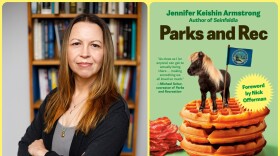 On this week’s 51%, WAMC’s Sarah LaDuke learns about everyone’s favorite comfort show, Parks and Recreation, with pop-culture writer and historian Jennifer Keishin Armstrong. “Parks and Rec” ran on NBC from 2009-2015, capitalizing on the success of The Office and a sense of political optimism following the election of then-President Barack Obama. It brought us Little Sebastian and Galentine’s Day — but it was also always on the verge of cancellation. Keishin Armstrong’s new book, Parks and Rec: The Underdog TV Show that Lit’rally Inspired a Vision for a Better America, dives into the program’s history and what it means to viewers today.
 -
On this week’s 51%, WAMC’s Sarah LaDuke learns about everyone’s favorite comfort show, Parks and Recreation, with pop-culture writer and historian Jennifer Keishin Armstrong. “Parks and Rec” ran on NBC from 2009-2015, capitalizing on the success of The Office and a sense of political optimism following the election of then-President Barack Obama. It brought us Little Sebastian and Galentine’s Day — but it was also always on the verge of cancellation. Keishin Armstrong’s new book, Parks and Rec: The Underdog TV Show that Lit’rally Inspired a Vision for a Better America, dives into the program’s history and what it means to viewers today.
-
 On this week’s 51%, we recognize Sexual Assault Awareness Month and speak with the head of the Texas Advocacy Project, an organization offering legal support and safety planning for survivors of dating and domestic violence, sexual assault, child abuse, and human trafficking. CEO Heather Bellino says it is critical for survivors to know their rights and have access to support that still allows them to take the lead on how they want to move forward. WAMC’s Josh Landes also details a bill in Massachusetts aimed at closing loopholes around age of consent that currently shield teachers from facing legal consequences for sexual misconduct with students in their care.
 -
On this week’s 51%, we recognize Sexual Assault Awareness Month and speak with the head of the Texas Advocacy Project, an organization offering legal support and safety planning for survivors of dating and domestic violence, sexual assault, child abuse, and human trafficking. CEO Heather Bellino says it is critical for survivors to know their rights and have access to support that still allows them to take the lead on how they want to move forward. WAMC’s Josh Landes also details a bill in Massachusetts aimed at closing loopholes around age of consent that currently shield teachers from facing legal consequences for sexual misconduct with students in their care.
-
 Genevieve Wheeler Brown is a decorative arts specialist and author of the new book ‘Beyond Blue and White: The Hidden History of Delftware and the Women Behind the Iconic Ceramic.’ She will be in discussion with a New Netherland Institute Director Dr. Deborah Hamer coming up on 4/12 at 2 pm at the Albany Institute of History and Art. They will discuss the women in the Netherlands who made the beautiful ceramics, the woman who brought it to New Netherland and New York, and the 19th Century Collectors who collected and championed it. In addition, selections of blue and white delft objects from the Albany Institute’s collection will be on display as well.

© 2026

Play Live Radio
Next Up:
0:00
0:00
Available On Air Stations


