-
 For more than two decades, Louise Penny has made the village of Three Pines a favorite destination for mystery readers. Now Chief Inspector Armand Gamache is drawn into another unsettling case – his 21st. Penny joins us to talk about Miss Wolcott’s Ghost, and why the past is never quite finished with us.Louise Penny on this week’s Book Show.
 -
For more than two decades, Louise Penny has made the village of Three Pines a favorite destination for mystery readers. Now Chief Inspector Armand Gamache is drawn into another unsettling case – his 21st. Penny joins us to talk about Miss Wolcott’s Ghost, and why the past is never quite finished with us.Louise Penny on this week’s Book Show.
-
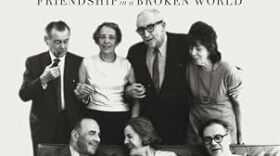 We live in a time when political disagreements can end friendships, divide families, and make civil conversation feel nearly impossible. But what if friendship is precisely what our democracy needs most?In his new book, 'A World We Share: Hannah Arendt and the Power of Friendship in a Broken World,' Roger Berkowitz turns to the influential political philosopher Hannah Arendt, exploring how her remarkable friendships shaped her thinking about politics, truth, and human connection.Berkowitz argues that democracy depends not simply on agreeing about facts, but on learning to live with people who see the world differently.
 -
 For more than four decades, Peter King has had a front row seat to the biggest stories in professional football. A three-time national sportswriter of the year, King became a must read for NFL fans for his legendary Monday morning quarterback column at Sports Illustrated and his later work at NBC Sports.Now, in his new book, 'The Game,' King takes us behind the scenes of America's most popular sport, from cross country adventures with John Madden to the rise of Tom Brady, Peyton Manning, and Patrick Mahomes. King shares unforgettable stories about the personalities, the triumphs, the controversies, and the costs of professional football.
 -
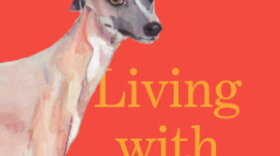 When Anna Hayward adopted Freddie, a rescued Italian greyhound, she expected the usual joys and challenges of bringing a dog home. Instead, she found herself living with an animal whose severe separation anxiety made it nearly impossible to leave him alone. In her new book 'Living with Freddie: How a Dog Taught Me to Be Human,' Hayward chronicles how Freddie upended her work, relationships, daily life, and ultimately changed the way she understood animals and herself. Hayward is a former staffer at 'The New Yorker,' and she has studied animal behavior and welfare science of the University of Pennsylvania's School of Veterinary Medicine. Her memoir combines personal experience with the science of animal behavior and asks some fascinating questions about love, responsibility, and what we can truly know about another mind.
 -
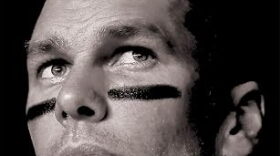 Tom Brady's extraordinary football career is often measured in Super Bowl rings, records, and of course longevity. But what does that kind of greatness cost? In the new book 'Brady: An American Story and the Price of Greatness,' journalist and best-selling author Lars Anderson looks beyond the statistics to explore the man behind the legend, drawing on more than 350 interviews.Anderson traces Brady's rise from an overlooked college quarterback to one of the most accomplished athletes in the history of sports, while also examining his relentless drive, discipline, and the impact of that obsession on his personal life.
 -
Anthony Tommasini, the former chief classical music critic for 'The New York Times,' turns his attention to one of the most important American singers of the twentieth century in his new book, 'Voice of a Century: The Life and Artistry of Marian Anderson.'
-
 Edwidge Danticat has long explored Haiti, family, memory, and the meaning of home. Her new novel,'Dèy,' follows a Haitian American woman who survives a mass shooting and keeps it secret, confronting trauma, grief, motherhood, and survival.Edwidge Danticat on this week’s Book Show.
 -
Edwidge Danticat has long explored Haiti, family, memory, and the meaning of home. Her new novel,'Dèy,' follows a Haitian American woman who survives a mass shooting and keeps it secret, confronting trauma, grief, motherhood, and survival.Edwidge Danticat on this week’s Book Show.
-
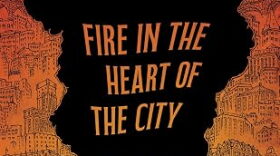 The 1911 Triangle Shirtwaist Factory Fire is remembered as one of the defining tragedies of American labor history, but historian and former journalist DavidConrad-Pérez argues there is another largely overlooked story in its aftermath. His new book, ‘Fire in the Heart of the City: The Triangle Shirtwaist Tragedy and the Origins of Modern Charity,’ examines the struggle between labor organizers and New York's wealthy civic leaders over how the city should respond and how that battle helped shape modern philanthropy and social welfare.

© 2026

Play Live Radio
Next Up:
0:00
0:00
Available On Air Stations


