-
 Marine heat waves are becoming more frequent, longer lasting, and more intense as the climate warms. And new research suggests their impacts extend far beyond dying coral reefs and declining fish populations.
 -
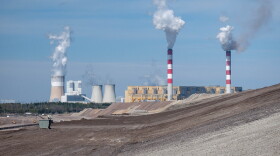 Under the Paris Climate Agreement of 2015, more than 190 countries pledged to keep the global temperature less than 1.5 degrees Celsius above the average during the preindustrial period of 1850 to 1900. This period was before humans altered the atmosphere and the climate by emitting billions of tons of fossil fuel emissions and other pollutants. The level was chosen because climate models indicated that warming further would greatly intensify extreme weather events, ecosystem losses, and even potential submersion of small island countries.
 -
 The Himalayas, often called the “Third Pole,” are the lifeblood of South Asia. Home to some of the world’s largest glaciers, these mountains supply fresh water to rivers that sustain nearly two billion people. But climate change is accelerating the melting of Himalayan glaciers, threatening the region’s water supplies, agriculture, and energy systems. The warming climate is also making the mountain environment increasingly unstable.
 -
 Starting at the end of May through mid-August, Europe has suffered through five rounds of dangerously high temperatures, breaking records in 18 countries. Temperatures were the highest ever recorded for May. Western Europe was the most affected area, with reports of record-breaking temperatures in France, Ireland and the United Kingdom.
 -
 El Niño is a natural climate pattern during which sea surface temperatures in the central and eastern tropical Pacific Ocean become significantly warmer than average. This drives hotter weather around the world. Since the world is already warming, El Niño only amplifies that warming. The El Niño of 2023 and 2024 resulted in the hottest years ever recorded. The strong El Niño currently taking place is shattering temperature records from Europe to Asia.
 -
 Disasters are big business. Decades ago, meteorologists at the National Oceanic and Atmospheric Administration started tracking the number of natural disasters in the US – the ones that incurred at least a billion dollars in damages. The numbers have gone up and up. FEMA used to handle 25 major disasters per year on average; in the past decade, the number is 63. FEMA’s Disaster Relief Fund averaged $3.4 billion a year in the 90’s and the early years of the new century. Now, annual spending is closer to $16 billion.
 -
 For decades, climate scientists have been warning about the effects of burning fossil fuels on global temperatures. They have been developing increasingly sophisticated climate models that simulate how the atmosphere, oceans, and land will respond under different emissions scenarios. But as the world has warmed and the effects of the warming increase, the models have not been taking into account additional sources of emissions that result from that warming.
 -
 Rising sea levels around the world is one of the most visible consequences of human-caused climate change. As global temperatures rise, oceans absorb more heat and expand, while melting glaciers and ice sheets add even more water to the seas.
 -
 The late May heatwave in Europe has broken records in more than half a dozen countries. For example, in Oxford, England, where a continuously operating weather station has been keeping records since 1815, a new May record was set on the 26th at nearly 93 degrees Fahrenheit. London reached 95 degrees; the highest temperature ever registered this early in the year.
 -
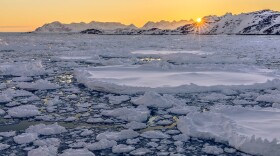 Greenland is one of the fastest-melting iced-over regions on Earth. In fact, scientists say the large-scale melting of Greenland’s massive ice sheet is irreversible, and it’s happening now at an accelerating rate.

© 2026

Play Live Radio
Next Up:
0:00
0:00
Available On Air Stations


