-
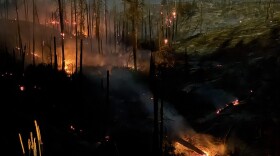 For decades, climate scientists have been warning about the effects of burning fossil fuels on global temperatures. They have been developing increasingly sophisticated climate models that simulate how the atmosphere, oceans, and land will respond under different emissions scenarios. But as the world has warmed and the effects of the warming increase, the models have not been taking into account additional sources of emissions that result from that warming.
 -
 China is the biggest installer of renewable energy in the world as well as the largest global manufacturer of renewable energy technology. However, it is also the biggest emitter of greenhouse gases and, most unfortunately, the biggest user of coal.
 -
 CO2 emissions come from a wide variety of sources. How to reduce them is obvious in some cases – such as by driving electric cars – but very difficult in others, such as the emissions from aircraft. Aviation accounts for 3.5 to 5% of global greenhouse gas emissions. In the European Union, it is about 4%.
 -
 Historically, growing industry and the economy meant burning more fossil fuels. As the world faces the prospect of needing to reduce carbon emissions, the worry is that it can’t cut emissions without cutting growth. But a new analysis by a London-based think tank has found that the opposite is happening.
 -
 Contrails – short for condensation trails – are linear clouds made up of ice crystals that form behind jet aircraft at high altitudes. These artificial cirrus clouds are formed when hot and moist aircraft exhaust meets cold and humid ambient air. Water vapor in the exhaust condenses on particles that originate from soot in aircraft exhaust.
 -
 Livestock production contributes between 11% and 19% of global greenhouse emissions. The largest source of these emissions is enteric methane, the gas produced during digestion as the feed ferments in the animal’s stomach and is released mainly through burping. There are other cattle-related emissions as well, including the release of nitrous oxide from manure.
 -
 In 2015, a report by the UN's Intergovernmental Panel on Climate Change estimated that the world was headed towards 3.7 to 4.8 degrees Celsius of warming if stronger actions were not taken to cut emissions. This level of increased temperature (as much as nearly 9 degrees Fahrenheit) was described as being incompatible with an organized, equitable, and civilized global community. In short, the consequences would be dire.
 -
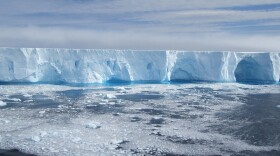 Antarctica is warming roughly twice as fast as the rest of the planet, putting its vast ice sheets, surrounding oceans, and unique ecosystems at growing risk. A new study led by researchers from the Australian National University and the University of New South Wales warns that the continent may face sudden and potentially irreversible changes. Without sharp global reductions in carbon emissions, these shifts could reverberate far beyond Antarctica, affecting ocean currents, weather patterns, and coastal communities across Australia and around the world.
 -
 Wastewater treatment plants in the U.S. clean trillions of gallons of water each year. Whatever water gets drained down sinks or flushed down toilets goes through these plants to be rendered clean enough to return to the environment.
 -
 The world’s largest meat and dairy companies are responsible for emitting more methane than all the countries in the EU and the UK combined. The biggest meat company in the world, the Brazilian company JBS, accounts for nearly a quarter of the industry’s emissions and is more than the methane emissions from ExxonMobil and Shell combined.

© 2026

Play Live Radio
Next Up:
0:00
0:00
Available On Air Stations


