-
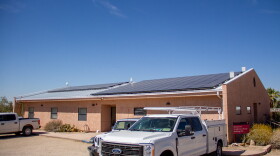 It’s been a rough year for the rooftop solar business. The Trump administration passed a measure last year that phased out the main federal tax credit for rooftop solar. It also imposed tariffs on imported photovoltaic panels and other parts. These policy changes have led to significant decreases in sales for installers. Estimates are that new residential solar generating capacity will fall 21% this year compared to 2025. That is a big enough drop to put many U.S. solar companies out of business altogether and to force the remaining companies to slash costs.
 -
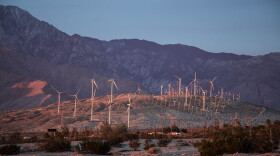 The world is in a global transition from a fossil-fuel-based energy system to a zero-carbon, renewable energy system. Renewable sources including solar, wind, hydroelectric, and geothermal power form the backbone of energy production along with nuclear power. Heating, transportation, and industrial processes are shifting to run on electricity rather than burning fossil fuels.
 -
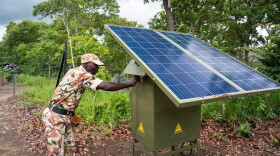 Africa is experiencing a boom in solar energy that is largely unaccounted for in any official statistics. It is primarily composed of rooftop arrays and other small systems and is mostly in sub-Saharan Africa. The rapid buildout is driving solar generation to record levels but is largely untracked.
 -
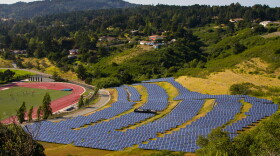 The silicon solar cell was invented in 1954. In the 1970s and 1980s, solar panels first started appearing on roofs. But even by the turn of the century, the total global capacity was below 5 GW. Over the next decade, European and Japanese programs drove early adoption and by 2010, the global total was about 40 GW. The next decade saw dramatic reductions in the cost of solar modules and a period of rapid growth ensued.
 -
 Solar panels produced 51% of California’s electricity during the month of May. This was the first time the clean energy source produced more than half the state’s power for an entire month. But it wasn’t just a milestone for California; it was a milestone for the whole world. California was the first major economy to cross the 50% threshold for an entire month. In June 2025, Hungary produced 47% of its power with solar, but Hungary’s GDP is far smaller than that of California.
 -
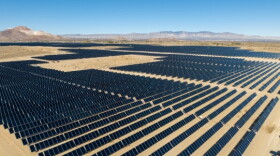 The largest solar energy project in the United States is under construction in Arkansas. The Steel River Energy Center will eventually include 2.5 GW of solar and 2.9 GWh of battery energy storage.
 -
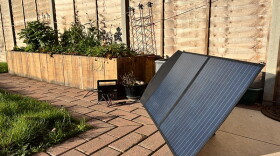 During the past year, there has been growing interest in the U.S. in balcony solar: small solar panel systems that are hung up outside and send power straight into wall sockets to partially offset people’s utility bills. These systems first appeared in Germany in the late 2010s and spread through Europe when energy prices spiked because of the war in Ukraine. German households had installed more than four million systems as of last year.
 -
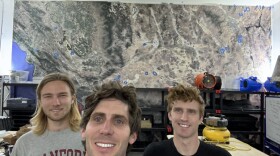 A space mirror satellite is an orbiting spacecraft that features a large deployable reflective surface. Its purpose is to redirect sunlight and beam it down to a specific location on Earth. It would basically provide sunlight on demand.
 -
 The Schoharie Central School District, located in the heart of New York’s Mohawk Valley, recently transformed a former hayfield into a one-acre solar installation. The system is rated at 749 kilowatts of power. The project was funded by $2.4 million in voter-approved capital as well as state aid.
 -
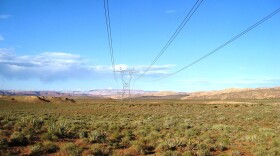 The part of the year between the chill of winter and the heat of mid-summer tends to be when renewable energy systems perform best. Longer, milder days when electricity demand is relatively low are when wind and solar power are ramping up and can account for greater shares of grid energy consumption.

© 2026

Play Live Radio
Next Up:
0:00
0:00
Available On Air Stations


