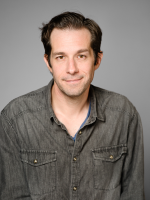
At Saturday’s commencement ceremony at Russell Sage College in Albany, when the announcer gets to the D section, they’ll read the same name twice: David Davis.
That’s because David Davis, Jr., age 45, and his son, David Davis III, age 21, are graduating as members of the same class. They both studied psychology, and are planning to open a practice together. Earlier this week, when they stopped by our studios, the elder David Davis told me that he always meant to finish college, but he paused his education to be a dad.
INTERVIEW TRANSCRIPT
David Davis, Jr: When David was about to be born, I'm very family oriented. So I decided to switch jobs, work overnight so I can be there for my son, coach pretty much every sport he was involved in.
Sam Dingman: When David got towards the end of high school, and you started to have these thoughts about maybe completing your college journey, do you remember the thoughts that that went through your head? Was it something about seeing his progress?
David Davis, Jr: It was more, I want to be a good role model for David, and not just sports. I just wanted to be...I wanted him to see the light at the end of the tunnel. And I couldn't do it unless I walked it myself.
Sam Dingman: David, let me ask you - David, the younger. Growing up playing sports. Your dad was just saying he was very involved in your sports career. What sports did you play?
David Davis III: I played basketball, baseball, football for some time, hockey, lacrosse for some time.
Sam Dingman: And did you like having your dad around?
David Davis III: Of course. Yeah, it was really good having my dad as the head coach. Yes, it was very inspirational just seeing him there too.
Sam Dingman: What do you think it is about your dad that makes him a good coach?
David Davis III: A coach will sit there and teach you. My dad will make sure that you get to and from your house safe, and that you got shoes for your next game too.
Sam Dingman: Was that something that would happen sometimes?
David Davis, Jr: Absolutely. Family. I'm all about family. And it's family at work, family at home, or family in the court or field. It's all about family, and you got to treat your family right.
Sam Dingman: I have to ask you also, you guys share a name. Was that ever something that was that came up, like when you were playing sports?
David Davis III: All the time. I feel like everybody in my family's named David. So if you say the name David, everyone's gonna turn their head and look.
David Davis, Jr: That is so true. My father's name is David. My wife's father's name...her brother. David's just one of the best names.
Sam Dingman: David's all around.
David Davis, Jr: One of my best friends is David.
Sam Dingman: Tell me about the moment you did decide to finally re enroll and to also study psychology.
David Davis, Jr: There was a situation in life where I needed to actually go into mental health...I needed a counselor. I, at the time, did not believe in it, and thought it was...I believed the stigma behind it. I believed, like, you know, black males should hide their feelings, we should keep it inside. But then once I went into counseling myself and found the benefits of it, I was astonished. I wished I had it sooner. And then I looked around all of my friends and family. It's like, wait - why doesn't anyone else do this? And no one did. So I started doing a little research, like, trying to find counselors like me. And there wasn't any.
Sam Dingman: When you say counselors like me, do you mean black male counselor?
David Davis, Jr: Yes, yes. At the time when I was trying to find one for myself, the nearest one was in DC - Washington, DC. I wanted a black male father figure to talk about my black male father figures, and there was none here. It was nothing the capital region.
Sam Dingman: What was it that pushed you over the edge to actually sit down with a therapist for the first time?
David Davis, Jr: Well, when David was 13, I discovered I had a daughter from high school. We found this out, and she moved in literally a week later. And all the issues that for me, being family oriented, and trying to be a good father to her...I wasn't there for most of her life, put it so I needed counseling.
Sam Dingman: Thank you for sharing that. What's your memory of that moment? David, if I may ask?
David Davis III: So I was actually the one that discovered it. I remember it was a Sunday morning, and we always clean every Sunday morning. And I got a message on my Facebook Messenger, which was kind of secret at the time. I wasn't supposed to have it. I got a message from this random person asking to talk to my parents. At the time, I knew my mom worked in high school, so I honestly thought it was just someone that she worked with that needed help. So I ended up telling them, and it turns out I have his new sister.
Sam Dingman: Wow. Can I ask you...I mean, what did you observe in your dad? You know, he became even more of a father than he had been.
David Davis III: I mean, I feel like there really was no real difference. He just took another kid under his arms.
Sam Dingman: David, I'm gathering from the way you have talked about it previously, that's maybe not how it felt?
David Davis, Jr: Not at all. That was hard, because it was my daughter, and I should have been there from the beginning, if I knew. But I didn't. And that's what hurt, and that's what really put me over the edge where I needed some help.
Sam Dingman: David, I know you came around to psychology through your dad. My understanding is you guys are interested in opening a practice together, right?
David Davis, Jr: Yes.
David Davis III: Yes.
Sam Dingman: So do you imagine that you'll specialize in similar parts of psychology, or are you interested in other areas?
David Davis III: We're both interested in very different parts of psychology. So I'm more interested in the community psychology realm of things. So I'm more interested in what aspects we could do to help the community. Or I just ended the internship, and I'm starting a job with C.A.R.E.S. in New York right now, which - they're focused on homelessness in the capital region. So just using that problem as an example, as a community psychologist, I would want to focus on why there's still homelessness in the capital region, what initiatives and what policies we're doing right now to stop it.
Sam Dingman: And what about you, David?
David Davis, Jr: First of all, I'm very proud of him already, just by the answer he gave. But yes, I would like to focus on the mental health counseling part, and the counseling sessions. That way I can individually help people or groups, depending on whichever is the need is called for.
Sam Dingman: Thank you both so much for this conversation.
David Davis, Jr: Thank you.
David Davis III: Thank you.
This transcript has been lightly edited for clarity.