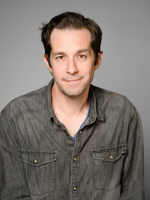
For a final look at some of the most high profile races in New York on this Election Day, Jimmy Vielkind, deputy managing editor of the Times Union's Capital Bureau, joined WAMC's Sam Dingman and Molly Anderson on Northeast Notebook.
Dingman: Jimmy let's start with the governor's race between incumbent Democrat Kathy Hochul and Republican challenger Bruce Blakeman. The governor has led by a seemingly comfortable margin in a lot of the recent polling in this race - what have we seen in the closing days of the campaign, and what are you keeping an eye on here as we head down to the wire?
Vielkind: Well, what has happened in the last few weeks of campaigning, and including the early voting period that just concluded on Sunday, is both candidates seem to be trying to juice up their base, so Governor Hochul knows that the biggest pot of Democrats in the state is within the five boroughs of New York City. She has spent a lot of her time in recent days with progressive figures, elected officials, including New York City Mayor Zaron Mamdani and Congresswoman Alexandria Ocasio Cortez. The three of them actually watched a Bills game on Sunday.
But really, that's strategic for Hochul. She needs to energize the same types of voters who surged for Mamdani last year. She wants them to come to the polls this year. Now Blakeman was been crisscrossing and barnstorming the state. He held a rally in Rensselaer County on Sunday evening. It was one of three events he held that day, and he seems to be trying to gin up the conservative base. He's been leaning into cultural issues, including immigration. Now, New York passed a pretty comprehensive law earlier this year that restricted how local police departments can cooperate with ICE. Blakeman says that he believes that hurts public safety. It's led to some high-profile criminal incidents, and that's something that really gets the Republican faithful going.
Anderson: Let's go now to New York's 21st Congressional District, Jimmy, and the contest there between Republican Anthony Constantino and Democrat Blake Gendebien. We saw an 11th-hour visit from Vice President J.D. Vance to the district yesterday to rally support for Constantino. What did you make of that race getting such high-profile attention from the Trump administration?
Vielkind: I think it's a clear sign that this one is coming down to the wire. It should be a Republican lock, a Republican blowout. Elise Stefanik, who's not running for re-election this year, who has won the district six times starting in 2014, she won by double digits, but what we're hearing from officials, both Democrats and Republicans, is that this is looking tight. And we saw a poll released last month by the Times Union, WAMC, and other media outlets, which found that Gendebien was actually ahead among likely voters. So this is an interesting race. It has a lot to do with Constantino's, how shall we say, unique presentation as a candidate, and of course there's the national mood in which, as we heard, President Trump's public approval ratings are in the high 30s, a lot below 40%. There's sort of a zeitgeist; the political tide is pulling to the left. So it's an open question whether, in such fertile Republican ground, someone like Gendebien can pull off what would be a massive upset.
Dingman: One of the things I'm curious about when it comes to this district and a couple of others, Jimmy, is the lack of debates. We did not see Constantino and Gendebien debate each other.
Speaking of the unique presentation of Constantino that you mentioned, Constantino did do some solo events where he passed them off sort of as one-sided debates. We also did not get a debate between incumbent Democrat Josh Riley and Republican challenger Peter Oberacker in the 20th District. How much, if at all, do you think the lack of debate has shaped these races?
Vielkind: Well, you know, it is interesting. There is some talk among political consultants that in the social media era, where media are so fragmented, people aren't tuning into these kinds of events. So, if you are ahead, the conventional wisdom is you don't want to do a debate because there's really only a downside if you're a lesser-known challenger, then a debate is great. It puts you on a big stage before a bunch of voters, and so that's why it was a little bit interesting to see Gendebien choose not to do it. As with Riley and Oberacker, which were actually running in the 19th District, not the 20th District.
But Riley is somebody who did debate Republican Marcus Molinaro two years ago when he was elected to that seat, but he sort of has came up with an excuse about some things in Oberacker's past as to why he didn't want to debate them. But you know, as someone who's a political reporter who watches lots of debates, they are revealed. About candidates, it shows how candidates think on their feet. So I think it's sad, but I do think it is a sign of the changing media landscape and the fact that there are some of these races, including the 19th District, which just aren't as competitive as they were a few years ago.
Anderson: Well, finally, Jimmy, we can't let you go without talking about Mike Lawler's attempt to defend his seat in the 17th District against Democratic challenger Cait Conley. We did see those two candidates face off in a debate, and that contest has brought up a lot of voter concerns about AI data centers. How much do you think that debate moved the needle, and what's the latest you're hearing out of the 17th District?
Vielkind: Well, it's absolutely a toss-up, Molly. And as you mentioned at the top of the broadcast, the big eyes on that district right now have to do with voting concerns in Westchester County. Before this broadcast went on the air, Mike Lawler spoke to reporters. He said that he and Conley are seeking a court order in which ballots that were filled out but not scanned will be processed at a combined facility under the supervision of both campaigns. But really, all kinds of issues are playing out in this race, and more than $50 million has been spent on advertising just in the 17th District, which of course covers the Lower Hudson Valley and Rockland County, parts of Westchester County, and and Putnam County, so that one I think is really down to the wire. Mike Lawler had a small advantage at the end in in polls, and we've also seen he he expressed kind of confidence in the final days of his campaign, even as Conley has rallied with House Minority Leader Hakeem Jeffries and other prominent Democrats.