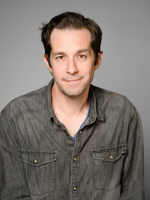
The Northeast Regional Folk Alliance conference got underway on Wednesday, and runs through this weekend. It's a gathering of folk music performers, venue owners, and radio hosts - including WAMC's own Wanda Fischer, host of the long-running show "The Hudson River Sampler." Wanda sat down with WAMC’s Sam Dingman earlier this week for a conversation about the state of folk music in 2026, and the significance of the conference.
INTERVIEW TRANSCRIPT:
Editor’s note: This conversation has been lightly edited for clarity.
Wanda Fischer: It's the Northeast Regional Folk Alliance, and we call it NERFA. It's one of the regional folk alliances that feed into the Folk Alliance International, which has its own international meeting, which will be this year in Chicago, in January. That should be great!
Sam Dingman: Oh my goodness!
Fischer: It was in New Orleans this past year. And I was at it last night. The conference opened by another folk DJ, who also is a performer, with a community sing. And he had a lot of people there to sing with him, and it was, like, in twelve-part harmony.
Dingman: What were you singing?
Fischer: Singing kind of Pete Seeger songs, and then we sang an Elvis song, and we sang a Beatles song, and he just had everybody singing to get people energized for this conference.
Dingman: Can you describe the feeling of, I mean, of being in the room with all these other practitioners and lovers and curators of this wonderful music, all singing together? I mean, that sounds like a pretty transcendent moment.
Fischer: Well, it's pretty nice because in previous years we had to travel for this. We went to Portland, Maine. They used to have it in the Catskills, and then the places got to be too small. As of yesterday, pre-registrations were at 600, so it's a great economic boon for Albany to have people come from all over. There are only a few people from Canada this year, and a lot of them don't want to have to come to the United States for political reasons. So, people come from all over the Northeast, and last night I saw people from Chicago because what they did was, they got gigs along the way.
Dingman: And just to be clear, these are fellow DJs, but it's also…who else? Musicians?
Fischer: It's musicians, performers, it's people who run venues, and then some people just come because they're fans. And I'll just give you an example of one of the sessions that will be taking place. One of them is called "Making a Living in Today's Music Business," and another one is called "The Next-Gen Artist Development: Creating Your Vision of Your Music." And there's a lot of trying to foster the younger singers to develop. And I'm seeing a lot more young people starting out.
Dingman: Well, that's got to be encouraging.
Fischer: It is encouraging.
Dingman: I mean, that was one of the main questions I wanted to ask you about this, Wanda. As someone who has been a part of this scene and this community for decades, what would you say are the most, I don't know if this is too dramatic but, urgent issues facing the folk music world right now? And what stood out to you about how that is, or maybe is not, being addressed at NERFA?
Fischer: Well, a lot of the venues are saying that people aren't going out anymore. The COVID pandemic really hit the venues hard, so many of them are trying to come up with alternatives like streaming, and sometimes people just don't want to leave their living room, so they can get it on their computer, and watch it that way. It's not the same as being in the room, but it's close. That's one thing that has happened. And also, some of the older people are not as mobile as they used to be, but they want to support the artists.
Dingman: You were mentioning the presence of a lot of young musicians last night. Do you think that the future is bright for the music?
Fischer: I'd give it a 50/50.
Dingman: Oh wow!
Fischer: Yeah, because sometimes the younger musicians want a lot more drums and a lot more production in their music, and some of the other people like things to be simple, you know, just a singer-songwriter with a guitar, maybe a bass.
Dingman: I mean, that's so much the tradition of this style, right? Is that it is so spare and it is so direct, the connection between the performer and the audience.
Fischer: Tonight, I'm introducing somebody who writes in the tradition of Old English-style ballads, but it's her writing. She's writing in the tradition. She's been heavily influenced by Old English-style ballads. And I love doing this stuff because I learn a lot too at these conferences. I get to meet different people that I've never seen.
Dingman: You mentioned the troubles that one of the Canadian attendees was worried they might have at the border last year. The fact that attendance from north of the border is down this year. That makes me want to ask you about how, in your opinion, the political moment is unfolding at NERFA and within the folk community more broadly. Because obviously, this is such an inherently political style of music, and I wonder what you're hearing in these conversations that you're having at this moment.
Fischer: There are a lot of political songs coming out right now. I have a song that I love to play: it's called "We the People," and it's written directly out of the Constitution/Bill of Rights. And when I first started playing it - well, I've been playing it for years - I had a person call me up and say, "You wrote that about the president," and I said, "First of all, I didn't write it, and secondly, it was written in 1988." So, I'm playing a lot of those things now and kind of pushing them into some of the newer things, and kind of weaving them in, and you know, I think the political…I think what we're going to see now, based on the election last week, we're going to see some different kinds of political songs, and I'm sure that people are writing them right now.
Dingman: Wanda Fischer, thank you very much.
Fischer: Thank you, Sam.