October was a tumultuous month at Bard College.
At the beginning of the month, Congressman Jamie Raskin, the ranking Democrat on the House Judiciary Committee, sent a letter to the college. Raskin alleged that former Bard president Leon Botstein's relationship with sex offender Jeffrey Epstein was deeper than previously known. In particular, Raskin flagged an email exchange between Botstein and Epstein which seemed to suggest that Botstein had participated in Epstein's trafficking of one of his victims.
Botstein has claimed he didn't write the email, and a subsequent investigation raised doubts about the authenticity of the message. But it was the latest in a string of incidents that have highlighted Botstein's connections to Epstein. Students expressed outrage and staged protests, and Botstein resigned his remaining affiliations with the College. Not long after all this, the school announced the hiring of a new president, Marvin Krislov, who will replace Acting President Jonathan Becker at the conclusion of the current academic year.
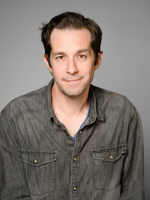
In the midst of this fraught moment in Bard's history, WAMC's Sam Dingman sat down with Acting President Becker.
INTERVIEW TRANSCRIPT
Editor's note: This conversation has been lightly edited for clarity.
Dingman: The first question I honestly have for you is, how are you doing? It's been an intense month.
Becker: Yeah, you know, I work at a college, which is a wonderful place to work. I believe in Bard's mission, which is distinct and amazing, especially with the day before the election. One of the things we do is we believe in democracy, and we aggressively defend democracy here and across the globe. We have students everywhere, and we represent something. And it's great to represent an institution which is distinct in those ways.
Dingman: It's now confirmed that your term as acting president will run through the end of this academic year. What are your priorities between now and next spring?
Becker: My priorities are to reaffirm Bard's mission in a time of transition, which we're under. We had a president who served for 51 years. We have a new interim president coming in, and I think there's a through line between them and me, which is a belief in this distinct mission of the institution. I've had the pleasure of going around the country and talking to alumni from Bard. I was in New York City earlier this week and talking to people, and what they all believe is the same thing. They said the unique nature of the education. We have very intense small classes at Bard, and you're taught by professors who are passionate about what they do. And what they talk about is they remember those interactions in the classroom and how it shaped them over their lives. And one thing we're like a family; we have a lot of different perspectives, but there's a deep love of the institution, and that's what I'm going to try to foster.
Dingman: Speaking of the relationship between the college and its students. The most recent letter from Congressman Raskin praised your office's cooperation with their ongoing investigation into former President Botstein.
As you know, the news about it also reinvigorated a lot of unrest in the student community. And you wrote an email to the entire Bard community, where you said you wanted to "acknowledge the anxiety, frustration, and anger awakened by the letter," as well as some of the protests that happened, and you also wrote about the urgency of addressing the "corrosive presence of sexual misconduct and sexual assault on college campuses, including at Bard," and that the college would engage in an external review process as we quote work to strengthen our office of Title IX. What can you tell us about where that review process stands and what it will entail?
Becker: So, as many days as I can a week, I go and I have lunch and I sit down in the middle of students and I talk to them. Meeting with student government tonight or tomorrow night. I've met with them several times. I'm trying to engage with the community and hear what people have to say because the center of what we do is our students, and I'm hearing a lot of very positive things and I'm hearing some challenging things. I like working with young people. I train them to be organized and civically engaged, so sometimes I'm the receiving end of their civic engagement, and that's okay. I always have a combination of being slightly annoyed when people are challenging me, but deep down, I'm really proud that people are airing their voices.
As far as Title IX and other issues like that are concerned, yes, Bard College is like many other, like every other college in the United States, in that gender-based misconduct and sexual assault does occur on our campus. Statistically speaking, it happens less, but any any amount is too much, and we have to acknowledge that. And I think a lot of students would have heard from them is they somehow imagined Bard was not a microcosm of society, and these things didn't really happen there. And they do. I'm sorry to say, we have engaged with a firm to do a review, not just of our Title IX policies, which I think are actually very up to date. They include everything from numerous forms of reporting to having an anonymous external source one could speak to, and so forth. Following federal law, of course, but how we support people who are going through that process. Yeah, and we've retained a firm. I don't have the name in front of me, but they're the nation's leading firm on this. They will be coming over the next month to interview people and offer recommendations, and we'll look at those closely. We'll respond just as we do always. Like there's always, no matter how well we think we're doing, we can always do better. This is a critical issue to people on our campus and elsewhere, and while I recognize that we're a microcosm of society, I all like to think that we could do better than the average, not just the average, but do as well as we can in this area.
Dingman: I know from our previous conversation that this interaction with students is something that's really important to you. And the last time we spoke, I actually met a student who was on the cross country team who talked about — you were driving by and like waving to them and everything. I know this is something that you do in a very organic way. I know also that in the wake of this newest letter from Congressman Raskin's office, there were a series of community gatherings and meetings where students were invited to kind of voice concerns that they were having. I'm wondering if you heard anything in those meetings that surprised you, changed your perspective? The reason I ask is because we have heard from a number of students since this most recent letter that while those resources that you outlined do exist, some students don't feel a high degree of trust in them.
Becker: I think in my conversations with students, what has emerged the most is this gap in expectations, this belief that somehow we would be entirely different from the rest of society, and that disappointment is higher because of not right. And I heard some difficult stories, which I don't know how — I don't want to say I expected to hear them. It is not shocking that I have heard difficult stories. On the other hand, it's important to hear them and to be reminded of the challenges that college students face and some of the very difficult and troubling things that can happen on a college campus. So, I think the first and most important thing is I try to leave it so that students feel that they've been heard. Trying to take concrete steps. We've just brought in another Title IX coordinator. We're bringing this outside group. As I said, I'm meeting with student government tomorrow. I'm just trying to listen and make sure students feel heard. And it's up to us to demonstrate through our deeds that we're not just passively listening, but that we're taking action, and we're working on that. You know, we have a wonderful group focusing on gender-based misconduct that has been operating since last semester. So I think that we're being responsible in that. I think that there will always be people who think you could do more, and there's always more that we can do. And I'm trying my best to do that.
Dingman: It strikes me that you're talking about one of the most unique challenges that a college president faces right where you obviously think of Bard as this idyllic place for young minds, and you want it to adhere to its highest standards. And then this is a moment where the students are, in some cases, feeling like if we're going to be peerlessly excellent in everything we do. We want to be peerlessly excellent in terms of how we root out sexual misconduct and and address it in our community.
Becker: Yeah, I mean that's that is what their aspiration is, and it's a it's a great aspiration. There's also a recognition, as I said, that we're a microcosm of society, and even places of excellence have troubling things that occur, and I think what we're trying to do is to contextualize what's going on. And again, one act of sexual misconduct, one act of sexual-based violence is too many. I would prefer that none occurred, but I also want to be realistic in in where we are within society. So, again, my view is we should listen where we can make improvements. We should make improvements and try to respond to what people are saying, and that's what I'm trying to do.
Dingman: In that vein, there was a petition delivered to your office, as well as the president of the board of trustees, signed by at last count over 1,500 current and former students, faculty, and staff, many of them signing under their real names, calling on the board of trustees to quote prohibit Leon Botstein from making Finberg House his personal residence or from taking up residence in any other building on Bard's campus. Has there been a formal response to that petition, and is the college planning to agree to those terms?
Becker: The board chair is engaged with those issues, and I'm not directly engaged, so I don't have much to add to that. I know that the petition has been seen.
Dingman: Some of incoming President Krislov's work presumably will be continuing the college's cooperation with Congressman Raskin. How much have you talked about that with him, and to whatever extent you can share, what have you told him?
Becker: Well, he's a lawyer, and I think will be much more attuned to these things than I am. So we haven't really discussed this at length. I've met him briefly. I was very pleased at our board meeting, he spoke of Bard's mission in a similar way that I speak of Bard's mission. So again, when I'm thinking about Bard's mission, nearly 20% of our students are displaced or refugees. In the United States, around 40% of degree candidates from Bard are Pell eligible, meaning they're within the lowest economic quintile. So I think I hope that he'll be carrying on the distinctive nature of the institution. I believe that the institution still represents something critically important in the sphere of higher education in America, and I have every belief that he will carry on those types of activities going forward.
Dingman: Last question for you, President Becker, what is next for you? Have you had an opportunity to think about that? And I mean, when we spoke last time, I was very struck by what you said about feeling like the president of your college should not really be somebody, if from a student's perspective, that is top of mind to you. That you know, your job is to be steward of the institution. And to you know make sure everything works well for the student body. You're coming to the end of this chapter of your experience at Bard, which has obviously lasted for decades. What can you tell us about what's in the future?
Becker: Well, so first of all, I have eight more months as acting president.
I tend to use those very carefully to make sure we're being responsive to many of the issues about which you spoke and continue our mission. Look, my job has been a large part to build these programs, which we speak about representing a private institution acting in the public interest. It's about access to education, supporting displaced people, promoting democracy within higher education. I've been blessed to have that opportunity to do that at Bard. The board would like me to continue doing that. The new president seems to want, so I will likely continue doing that. I'm also, by the way, looking forward to getting a sabbatical. It's my 30th year at Bard. I've never had a sabbatical. I just had a book come out last year on on voting in elections. I have a book coming out on civic engagement this spring, and I'd like to have time to do some more writing at some point, so I will do a couple of things. I'll go back to the faculty at some point. But in the meantime, we have a distinct mission in American higher education that no other institution has, and I have the chance to help us realize that mission.