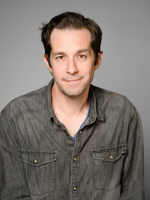
“Pumpkin Patrol" is an annual event where local amateur radio operators set up shop on overpasses around upstate New York to keep an eye out for people who might have designs on throwing pumpkins at cars. WAMC’s Sam Dingman reached out to the local amateur radio league in Albany to find out more, and discovered that coincidentally, one of the leaders of this operation is none other than WAMC's former news director and Senior Vice President. But these days, that's not how he introduces himself...
INTERVIEW TRANSCRIPT
Editor's note: This conversation has been lightly edited for clarity.
Dave Galletly: I'm Dave Galletly, amateur call sign KM2O. I am the vice director of the Hudson Division of the American Radio Relay League - the national organization for amateur radio - and a local participant in the Pumpkin Patrol effort, which happens each year.
Sam Dingman: And, we should acknowledge, a WAMC luminary.
Dave Galletly: Well, I wouldn't go that far, but yeah, this building has my fingerprints all over it.
Sam Dingman: Yes. Well, we're grateful for all the work that you did here, as well as the Pumpkin Patrol, which I'm excited to talk to you about. I wanted to begin by asking you just briefly to talk about, when you say amateur radio, and you give your call sign, for folks who are not aware of that world, what does that mean? Where can folks listen to you broadcast?
Dave Galletly: Okay, we don't broadcast. We communicate with other licensed amateur radio stations. We all are licensed by the Federal Communications Commission, much like this radio station is. And to do that we take tests, and there are levels of use which basically gives you access to real estate on the spectrum of all broadcasting. So, we have our own special little national parks on frequencies throughout the electromagnetic spectrum.
Sam Dingman: Okay, so let's talk about Pumpkin Patrol. If you could take us back a little bit, what is the original reason that Pumpkin Patrol came into existence? What was the problem it was looking to solve?
Dave Galletly: Well, it's very interesting because out in the Mohawk Valley, in Fort Johnson, New York, a citizens band radio operator was talking to a trucker who was driving down the thruway, and all of a sudden the trucker was injured when flying debris from an overpass hit the truck. And this, of course, was at what time of year?
Sam Dingman: I'm going to guess Halloween.
Dave Galletly: Yeah, absolutely correct. It was 1976.
Sam Dingman: So 50 years ago.
Dave Galletly: Yeah, this is the 50th anniversary. And this effort grew a little bit around that area of the throughway, and it was an area east of Amsterdam to east of Utica.
Sam Dingman: Before you go further, Dave, let me just make sure I understand. The trucker and the radio operator were just having a regular conversation, and in the midst of the conversation, the trucker was hit with this pumpkin?
Dave Galletly: That is my understanding. The idea was to station operators in vehicles at overpasses on as many overpasses over the thruway as possible on Halloween and the day before. And they would report to the Thruway Authority and Troop T.
Sam Dingman: And dispatch officers out to address potential…
Dave Galletly: Correct. The idea here, by the way, is not to intervene at all. It is only observation.
Sam Dingman: On the part of the amateur radio operation. You're kind of the eyes and ears.
Dave Galletly: That is it. Yeah, and we report what we see. I will say that, in my knowledge, there have not been any incidents in any of these covered areas since this program began.
Sam Dingman: Wow! So you have participated in the patrol.
Dave Galletly: Yes.
Sam Dingman: Can you give us an example from your experience of a situation where you saw somebody who you thought looked like they might be interested in in doing this, and the steps you took?
Dave Galletly: Okay. To be perfectly honest, pumpkin patrol is quite boring, and we like it that way.
Sam Dingman: I mean, that's ideal, right?
Dave Galletly: That is exactly right. I mean, we're there, we have placards on our cars, and we check in with each other at a predetermined portion of the clock, you know, a couple times an hour, and otherwise, if somebody is there who is suspicious, yes, we would report it. Normally, we are visited by a member of the state police and have a nice little conversation there. But the idea is more deterrence.
Sam Dingman: So, if I'm hearing you right, Dave, when you've been on patrol, it has been more an experience of vigilance. It sounds like there haven't necessarily been any confrontations with folks who want to throw pumpkins.
Dave Galletly: I've been doing this since 2020, and no.
Sam Dingman: So, you've been doing it for… I guess this will be, what, your seventh year if I'm doing that math?
Dave Galletly: I'm sorry. I misstated. I've been doing it since 2000! I said 2020 by mistake, sorry.
Sam Dingman: Okay, so this will be your 27th year. What keeps you coming back, even if in those 27 years there hasn't necessarily been some dramatic, you know, confrontation?
Dave Galletly: Camaraderie with the other operators, knowing that we are providing a public service, which, by the way, is one of the bases of amateur radio: providing public service worldwide. And now officially through Troop T, they provide us with the materials that we need, send us a little certificate of thank you afterwards. So yeah, it's a good feeling to know that you are making a difference by sitting by yourself and just watching, and that you can be a big help. And I believe that the authorities will tell you, the lack of incidents speaks for itself.
Sam Dingman: Well, Dave, thank you for this conversation. It's very enlightening to get a glimpse of this work and this thing that is happening in the community that I think a lot of people listening maybe wouldn't even know is happening.
Dave Galletly: Well, there are over three quarters of a million of us out there, amateur radio operators in the United States, so, we're here.