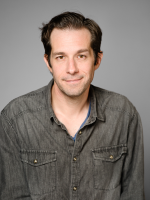
As all the coverage of the alleged gang rape at Cornell University has been unfolding, WAMC's Sam Dingman saw a series of social media posts from Dr. Nicole Bedera, a researcher and expert in the area of how institutions respond to sexual assault allegations. Bedera is also the author of the book, "On the Wrong Side: How Universities Protect Perpetrators and Betray Survivors of Sexual Violence."
In these social media posts, Bedera said she'd been contacted by a reporter at USA Today named Alyssa Goldberg — someone she'd given interviews on this subject to before.
Before she spoke to Goldberg this time, she told her she wanted to make sure that nothing she said would be used to undermine the credibility of Jane Doe, the survivor of this alleged assault, because Bedera's research is entirely concerned with a concept she calls "institutional betrayal." She saw the Cornell case as a textbook example of that.
Goldberg published a piece that was, in Bedera's mind, in line with that framing. But then, other USA Today journalists, including Rachel Hale and Chris Kenning, also published pieces on the Cornell case. Those pieces also quoted Bedera, but she had not spoken to those reporters.
Earlier this week, I agreed to interviews with two USA Today journalists. They wrote fantastic articles about the Cornell case that I'm proud to have been a part of. What I did not know is that their employer considers interviews to proprietary and opens up recordings to be used by any journalist.
— Nicole Bedera (@nbedera.bsky.social) 2026-10-02T19:37:17.611Z
Dingman spoke to Bedera about this and she said it was the Chris Kenning piece that bothered her the most, because that piece was a timeline of Jane Doe's account, and how it had supposedly shifted over time.
INTERVIEW TRANSCRIPT:
Editor's note: this conversation has been lightly edited for clarity.
Bedera: It was all about this framing of inconsistencies. That framing was treated as fact because it came from someone in law enforcement, as opposed to the way that I would see it, which is something we would need to see the available evidence to validate whether or not that was true, and so in many ways, Chris Kenning's story was exactly the story that Alyssa had promised my interview would not be used for. The other thing that bothered me about this piece is that by the time I found it, the New York Times reporting was out.
Dingman: And I should just say, Nicole, this New York Times reporting that you're referring to is information that the New York Times uncovered, which revealed that Jane Doe had in fact been consistent in describing what happened to her as rape from the time she first reported it to police.
Bedera: Right, and so one of the other things that upset me is by the time I saw this article, I felt like it should have been updated, and so I immediately went to email the journalist to say this is not true. What you reported is not true.
Dingman: And what did they tell you? I believe the person you wrote to, if I'm not mistaken, was the Deputy Editor for Investigations & storytelling, Carlos Frias. What was his response when you raised this concern?
Bedera: The response that he gave me was to say that all interviews with USA Today are proprietary, and so, the way I understood that was that they could use the interviews however they wanted, and I didn't really have recourse for taking issue with it.
Dingman: And so, by proprietary, just to make sure I understand, you took that to mean that by you giving a comment to any journalist at USA Today or giving an interview, the contents of that interview then become the exclusive property of USA Today to be used however they please, shared with other journalists.
Bedera: Yes, and I think this could be a good time to talk about the Rachel Hale piece because in the other two pieces, Chris Kenning paraphrased me, which in some ways I find more offensive to not even use my own words, but to make it sound like we had this conversation that he could frame however he wanted when we never spoke at all, but the one from Rachel Hale was the one that made me realize that it was the audio of the interview that had been shared, because there was a quote from me in that article. I recognized it from my conversation with Alyssa, and it had never been published anywhere. And so the only way she would have been able to access it, was if she had accessed that audio recording in some way or another.
Dingman: So it was it was something you had said that you knew you had only said to Alyssa?
Bedera: Right. And it was something that I'd said to Alyssa that I'd only said at this point privately.
Dingman: Well, I have to say, Nicole. I mean, thank you for sharing all of this. One of the reasons I am fascinated by your story here is because, in the spirit of full disclosure, we do something similar here at our WAMC newsroom, where if I was to interview a source for a story that is breaking news — I'll give you an example.
Right now, there's, as I'm sure you're aware, a lot of news coming out from Bard College about new allegations against former President Leon Botstein, and so we have a couple of reporters here, including myself, who have been working on this story over a period of months, and as we have been getting source material in, whether it's testimony from students on the campus or interviews that we did with campus officials, we have been sharing that widely around the newsroom.
I might say I'm going to be doing a piece about this that's going to air at this time, but we also have other news gaps that we need to fill throughout the day where we might have a one-minute thing on a newscast about it, where we might want to hear some testimony from students, and it's kind of understood that we are making this material available as fodder.
But the thing your story made me think about is that it, I guess, made me realize that I have always shared that material with the assumption that my colleagues would use it in a responsible way, but I guess it did make me think about the fact that what happened to you is, I think, at least in my experience, somewhat common in newsrooms.
I wonder what you make of that. I don't have an answer, but it's really made me think about this as a practice that we use, and we have a sense of of trust in our newsroom here that we're never going to take anybody out of context. We're never going to, of course, misleadingly edit something somebody says. But part of what you're speaking to is that the relationship between a reporter and a source is a very delicate thing.
Bedera: Yeah, I have to say that from my perspective, what I experienced was really unusual. And I'm someone who's spoken to the press for over a decade. Part of what made this feel so violating is that each of these articles made it look as if I had a personal conversation with the journalists, and then the other thing that I worried about is because I did have a trusted relationship with Alyssa, I know that I did make off the record comments.
I don't know exactly what happened to USA Today, but when I talk about my biggest fear, my biggest fear is that my audio recording was put into an AI service where any journalist could access that recording for any reason, and where, let's say, they were looking for a specific quote on campus sexual assault, they would get that quote out of context, and it might pick up something off the record, and that might not be context that they would have anymore.
I think part of why I can see this situation the way I do is because my research is fundamentally about consent. In these conversations, we often think about the relationship between you and a journalist as this interpersonal relationship. As a sociologist, I also see it as an institutional relationship, and it is kind of a "David and Goliath."
Dingman: And that is my conversation with sociologist Nicole Bedera, who researches institutional responses to sexual assault.
I reached out to the reporters involved in this story for comment and to USA Today, I received the following statement from a USA Today spokesperson: "As is standard practice in our newsroom, reporters share interviews and other information with colleagues covering the same story, and the original reporter is credited as a contributor on each piece. Dr. Bedera's quotes were not altered or used out of context. We value Dr. Bedera's expertise and her contributions to our coverage."