


In one of the latest folds in the ongoing trade war between Canada and the United States, President Donald Trump has enacted a series of tariffs on some Canadian goods and an outright ban on the import of some Canadian motorcycles. One brand in particular, Can-Am, is at the center of the newest bans.
Southern Adirondack Bureau Chief Aaron Shellow-Lavine went out and spoke with a local Can-Am dealer.
INTERVIEW TRANSCRIPT
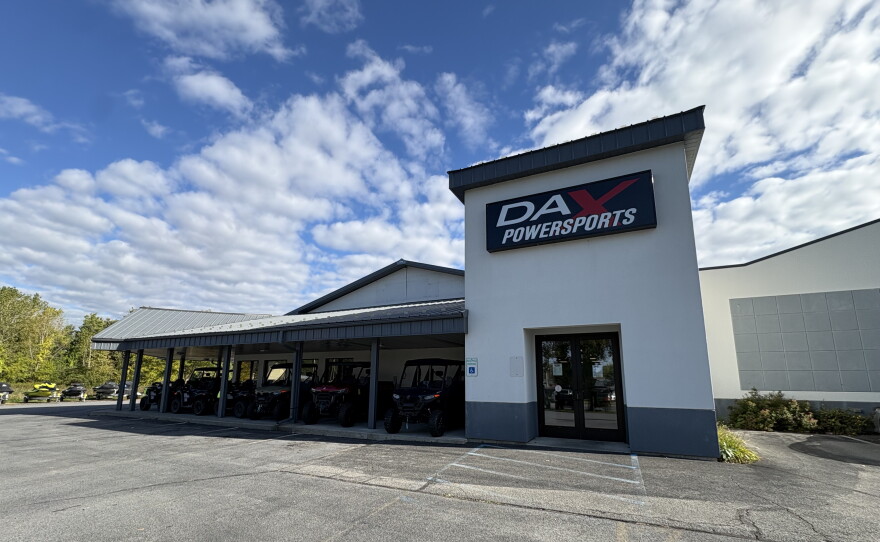
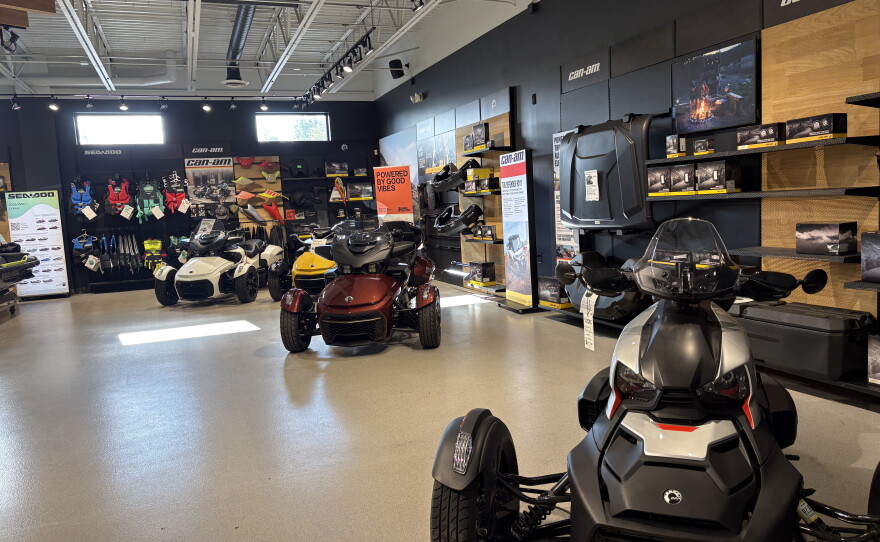
Aaron Shellow-Lavine: I sure did. Tom Curcio is a co-owner of Dax Power Sports up in Queensbury, New York. Picture a lobby filled with snowmobiles and four by fours and all sorts of gas-powered machines, including Can-Am Spyders.
Tom Curcio: So, nothing really has hit us too bad. A lot of it's been talking and posturing from both sides. You know, were there a couple delays throughout the year? Yeah, but nothing has really impacted the business as of yet. We're hoping that an agreement comes into place beforehand, but as of now, the only product line that would be affected would be the Can-Am Spyder.
Aaron Shellow-Lavine: Picture, if you will, a motorcycle. Now add two wheels onto the front, not three. two wheels on the front, one wheel on the back. It is more stable. I passed at least a dozen of them on the Northway up to Queensbury to go do this interview.
In less than a week on September 29 if things stay on their current course, Can-Am Spyders and other Can-Am motorcycles will no longer be imported to the United States in line with this ban coming from the White House. Their Can-Am selling season, the DAX Powersports Can-Am selling season, conveniently runs out right about now at the start of October. Okay, it starts back up in sort of the springtime. That's April to May-ish. So, you know March is the time where they would really start worrying, but the folks at Dax Power Sports are a stoic bunch. They are not worried, at least enough to tell me that they were worried about the current situation. For them, right now, their estimation is it's just one big game of chicken.
Tom Curcio: A few months ago, they had another little hiccup, and everybody's heard something. Oh, they're not shipping, you know, off-road machines or whatever, and you know that lasted about five days, so it didn't even affect anything. But you know, most of the time, people hear something and then social media kind of blows it out of proportion, and I think it's just a lot of posturing from both sides, you know, in the government, and I don't expect it to impact as much at all.
Aaron Shellow-Lavine: So now, this trade TIF, the most recent development, it's a most recent development. This has been going on for quite some time. Exactly. So, this is just the most recent development. It follows September 8 tariffs by Canada on American dairy, alcohol products, and motorcycles. So think Harley Davidson, think Indian motorcycles. Almost immediately afterward, that's when this most recent sort of retaliatory effort came to the United States. Before the September 8 tariffs by Canada, the United States imposed a 50% tariff on similar Canadian goods that was on august 22. So, this is just the most recent instance in this back and forth and back and forth and them and us and them and us. So, this is not new. The folks at DAX Powersports have, I would say, acclimated to it.
Sam Dingman: But I have to say, Aaron, you know, I'm listening to this tape of Curcio, he sounds pretty nonchalant about all this. Is it weighing on him at all? I mean, did you get that sense?
Aaron Shellow-Lavine: So, I mean, that's a question that I asked him straight up. This is the kind of thing that is happening. It is really impacting—it it has the potential, I'll say, to really impact their business, even if he, you know, is letting on that it's you know not a top concern of theirs. You know, is this a thing that is being discussed at the water cooler?
Tom Curcio: We're very, very aware of it. We try not to get too wrapped around you know the axle you know from the day to day stuff and look at more of a bigger picture of what it can do to possibly impact the business. You know we have some seen some price increases through the tariffs on you know raw materials affecting you know trailers and some different machines, but nothing too dramatic.
Aaron Shellow-Lavine: Not getting wrapped around their own axles.
Sam Dingman: I see what you did there, Curcio.
Aaron Shellow-Lavine: There's not much they can really do right now. Curcio tells me it just doesn't make business sense for them to be freaking out about a thing that might change. That might not be the opinion of the motorsport dealer down the street, but that is the stance that they're taking. And you know, as of right now, it's not really impacting their business. And in the past, these kinds of things have gone away. Before they have really, you know, there's a time frame when it's happening and a tariff is on and a ban is on, and then there is a time frame when it really will impact them. And so far, that lag hasn't really caught up. Prices are going up across the board, but again, if they're going up across the board, that doesn't really put pressure on them as a dealer to have to explain this, that, or the other, or a specific item, going up.
Tom Curcio: If, say, Honda has an increase, you'll see along Kausak, Kinyama, and everybody else. So, it's not like it's really affecting one specific brand or manufacturer, but we do see some inheritance price increases all across, especially with aluminum, steel, some of the you know PwC trailers, snowmobile trailers that we sell, we have seen those prices creep up a little more than normal, but it's everybody's in the same boat, so to speak.
Aaron Shellow-Lavine: And for those keeping track at home, they do sell jet skis, so I am going to count that as a relevant pun number two.
Sam Dingman: Well, Aaron, what about other impacts to Dax's business? We've talked about the the rising costs of raw materials, but what about say gas?
Aaron Shellow-Lavine: Right, so that was another question that I wanted to make sure that we got to. You know, riding motorcycles is a hobby for many people. There are other folks that we will get to certainly that it's not as impactful for them. But you know, he says so far gas prices aren't hitting them yet.
Tom Curcio: We may see something during snowmobile season coming up, but generally we don't see much of a uptick. We will see if gas stays over $4 a gallon, closer to $5. Then we do tend to see some people buying a motorcycle.
Aaron Shellow-Lavine: So, in one of the most incredible parts of having this job, you get to go out to talk to folks. You get to know them. You get to be a member of your community, and you also often get to learn something new. Indeed, motorcycles can, if you ride them the right way, get up to between 50 to 60 miles per gallon. Really, that's a lot better than my Subaru.
Sam Dingman: Those are Prius numbers.
Aaron Shellow-Lavine: You've got to ride them right. So Curcio told me that you know in the current economy, when we've got gas prices getting higher, they'll get folks coming in who say own a big old SUV that gets 10 miles per gallon, not great gas mileage, and it really starts to hurt when it costs $100 to fill up your gas tank versus a motorcycle, as a daily driver, spend $5,000 on a pre-owned motorcycle, and you got to fill it up, not as often as you got to fill up your truck if you're driving it every single day. So they have seen, you know, a couple people coming in looking for the alternative mode of transit.
Sam Dingman: I have to say, in the spirit of learning something new every day, I hadn't considered that particular sector of the motorcycle consumer-the person who has a truck, you know, that they maybe need for whatever purpose, or they just like driving. But that a motorcycle isn't just you know cool, but it's also a way to balance out.
