-
 In mid-March, the final turbine blades of Vineyard Wind, the offshore wind farm sited 15 miles south of Nantucket, were installed. Vineyard Wind is the first large-scale offshore wind project in the U.S. The $4.5 billion project features 62 turbines and is capable of providing clean energy to approximately 400,000 homes.
 -
 The sources of U.S. electricity production have changed dramatically over the past 15 years and continue to change as the political winds blow in different directions.
 -
 There are vibrations occurring in the ground nearly all the time. They happen when cars pass by, when machines are operating, and from natural forces in the earth’s crust. For the most part, we don’t notice these vibrations. But they are there, and they represent an untapped source of clean energy.
 -
 Utility-scale solar power is the fastest-growing source of electricity in the U.S. Well over half of all new U.S. electric capacity added in 2025 was utility-scale solar. As of late 2025, total utility-scale solar capacity surpassed 153 GW, enough to power 45 million homes.
 -
 It seems as if the whole world is retreating on climate and green energy. Politicians in many places are calling for so-called energy realism. In the US, President Trump calls global warming a hoax. The EPA has repealed the endangerment finding, the 2009 science-based finding that the buildup of heat-trapping greenhouse gases in the atmosphere endangers public health and welfare.
 -
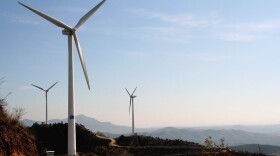 The world is undergoing an energy transition from fossil fuels to renewables. It is a global response to the dangers of global warming. The United States fully withdrew from United Nations climate negotiations in the fall of 2025. With an administration composed entirely of climate change deniers, the U.S. has abandoned global leadership on the energy transition. This radical action has enormous geopolitical, economic, and climate ramifications. For Americans, none of them are good.
 -
 Installing solar panels on bodies of water has the potential to generate large amounts of renewable energy. Among other benefits, floating solar has the advantage of not taking up land that has other uses. However, there are potential interactions between birds and floating solar facilities, possibly being problematic for both.
 -
 Our country has a deep political divide over wind and solar renewable energy sources. Generally, Democrats are in favor of them, and Republicans are against them. The current administration is doing whatever it can to stop the growth of wind and solar power despite that they involve nearly $100 billion in US investments and nearly 500,000 jobs.
 -
 Hydrogen can play a key role in the transition to clean energy because when it is used as a fuel, it only produces water as a byproduct. Hydrogen is already produced in industrial quantities, but it is primarily made with methods that use fossil fuels like natural gas. But instead of extracting hydrogen from hydrocarbons, it can be obtained by splitting water into its constituent elements.
 -
 Tidal power is a way to generate clean, renewable energy by harnessing the rise and fall of ocean tides. Unlike wind and solar power, tidal power is predictable on a regular basis.

© 2026

Play Live Radio
Next Up:
0:00
0:00
Available On Air Stations


